.png)
How Walk and Run Groups Support Real S.E.L.F Care
When we talk about self-care, most people picture candles, bubble baths, and treating yourself. Nice ideas, but not always what genuinely improves mental health. Real self-care is often far more practical – and far more impactful.
One helpful way to think about it is through S.E.L.F Care: Sleep, Exercise, Looking Forward, and Fuel. These are the everyday foundations that actually strengthen mental and emotional wellbeing.
Community walk and run groups are a surprisingly powerful way to support all four pillars of S.E.L.F Care while also tackling one of the biggest health issues facing Australia and much of the Western world: the loneliness epidemic.

Exercise: Movement That Motivates You to Show Up
Walking or running regularly reduces stress hormones, boosts mood-supporting neurotransmitters, and helps regulate anxiety and depressive symptoms. Doing this in a group adds an extra layer of benefit – you get the mood lift and the social support.
People often find it easier to stick with movement when others are expecting them, and the simple act of showing up becomes part of a routine that reinforces confidence and consistency. Studies show that group exercise reduces perceived stress and improves overall wellbeing more than exercising alone. It’s not surprising: movement shared is movement enjoyed.
Looking Forward: Building Routine, Purpose and Anticipation
One of the most underrated parts of mental health is having something pleasant to anticipate. A weekly walk or run group creates a built-in reason to leave the house, a moment in the week you can genuinely look forward to.
Whether it's catching up with familiar faces, exploring a new route, or simply enjoying the fresh air, that sense of anticipation is itself protective. It adds rhythm and purpose to the week – things many people lose during life transitions such as moving cities, retiring or going through relationship changes.
Social Connection: Belonging That Protects Your Health
Regular contact is one of the strongest buffers against loneliness and its health impacts. In Australia, somewhere between 15–36% of adults report high or chronic loneliness, and this has been steadily rising. Loneliness is linked not just with depression and anxiety, but with cognitive decline, cardiovascular issues, and even premature mortality.
Walk and run groups counter this by creating gentle, low-pressure opportunities for connection. Same time, same place, same friendly faces.
It’s the kind of repeated, informal interaction that helps friendships form naturally – the kind we used to get through local neighbourhoods, workplaces and extended families, but which modern life has gradually stripped away.
Many people describe their group as “like a family”, offering check-ins, support and shared identity that strengthen mental resilience.
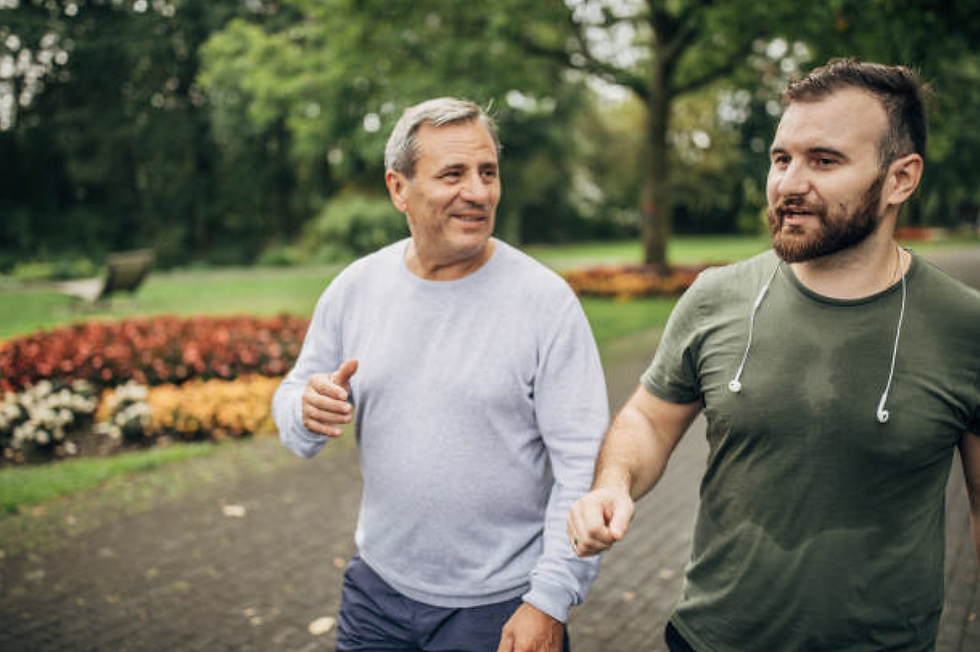
Fuel: Making Better Choices Because You Feel Better
Movement and connection often encourage healthier everyday habits. When people feel supported and energised, they’re naturally more inclined to choose foods that make them feel good, rather than relying on quick fixes or comfort eating.
Sleep: The Often-Forgotten Benefit
Regular movement, lowering stress and having reliable social contact all support healthier sleep. Better sleep improves emotional stability, cognitive function, and motivation – reinforcing the whole cycle of S.E.L.F Care.
When you move your body, connect with others and reduce daily tension, sleep becomes deeper and more restorative, creating a stronger foundation for the next day.
Why Walk/Run Groups Work So Well
These groups directly tackle the biggest drivers of loneliness:
reduced community ties
more time spent online
fewer natural opportunities for face-to-face connection
They are simple to join, low-cost or free, and accessible to people across age groups and fitness levels. They can be woven into workplace wellbeing programs, social prescribing, and community health initiatives. They offer something most modern interventions struggle to achieve: meaningful, in-person human connection that fits into ordinary life.
In short, joining a walk or run group isn’t just good for fitness – it’s a genuine, practical act of self-care. It strengthens every part of S.E.L.F Care: Sleep, Exercise, Looking Forward, and Fuel. It supports mental health, builds belonging, and helps communities reconnect in a world that desperately needs it.
SANAMethod puts community at the heart of what it does. One part of that is the free, low-impact weekly Sunday Stroll – an easy way for members to build movement, connection and routine into their self-care.

