.png)
Why Legumes Deserve More Attention
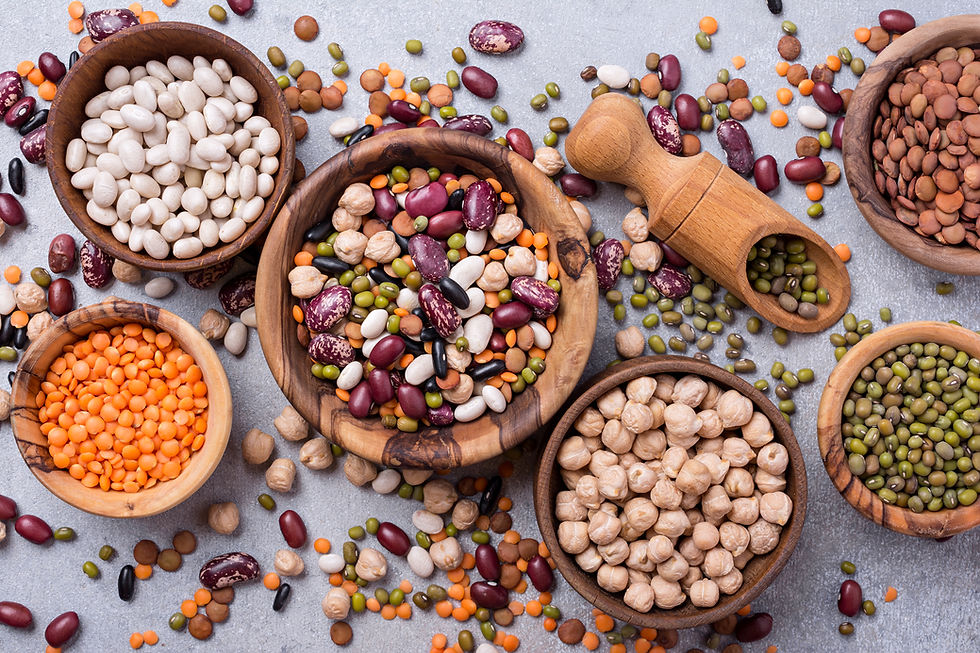
If there's one humble food worth giving a bigger spot on your plate, it's legumes. Beans, lentils, peas and soy foods quietly tick almost every box we care about in nutrition coaching: fibre, lean protein, resistant starch, minerals, and a lot of food for relatively few calories. They get filed away as "just carbs", which really undersells them. Here's why they deserve more attention, and how to use more of them.
What makes legumes so good for you?
Legumes are genuinely nutrient-dense, not empty carbs. In one tidy little package you get:
Fibre, including the fermentable kind your gut bacteria love, which supports digestion and gut health.
Plant protein, useful for satiety and for rounding out your protein through the day, especially if you're eating less meat.
Resistant starch, a type of carbohydrate that acts a bit like fibre and feeds your gut.
Minerals like iron, magnesium, potassium and folate.
Low calorie density, meaning they fill you up with a satisfying volume of food for relatively few calories.
That last point is why they're such a friend when you're working on your weight: they help you feel full and satisfied without piling on the energy.
The longevity link (with a sensible caveat)
Here's a finding that turns heads. In one cross-cultural cohort study of older adults across several countries, legumes stood out as the one food group consistently linked with living longer. Researchers reported roughly 7 to 8% lower risk of dying over the study period for every extra 20 grams of legumes eaten per day, which is only about a heaped tablespoon.
Now, the caveat: this kind of study shows an association, not proof that legumes alone cause a longer life. Observational nutrition research can be nudged by things like healthy-user bias (people who eat more legumes often do other healthy things too) and the difficulty of measuring diets accurately. So we hold it loosely. But it points in a useful direction, and it lines up neatly with the broader, stronger evidence for fibre-rich, plant-forward eating.
Why they earn a place in your week
Putting the longevity headline aside, legumes do a lot of quiet, practical good: they support fullness and steady energy, they're kind to your gut, and they make it easy to lean your plate towards whole, minimally processed foods. For most people, swapping some processed meats, refined starches and ultra-processed snacks for beans, lentils and other intact plant foods is a genuinely worthwhile upgrade.

Easy ways to use more legumes
You don't need to go all-in or cook from scratch every night. A few low-effort swaps:
Stir a tin of lentils or beans through a bolognese, soup, curry or pasta sauce to stretch it further and add fibre.
wap some of the refined starch on your plate (think white rice or white bread) for lentils, chickpeas or a bean salad.
Keep tinned beans and chickpeas in the cupboard for a fast, no-cook protein. Just rinse and add.
Reach for roasted chickpeas, hummus and veg, or a bean dip instead of an ultra-processed snack.
Add a spoonful of legumes to dishes you already make, rather than overhauling your meals.
A quick, practical note: if you're not used to much fibre, build up gradually and drink plenty of water. That helps your gut adjust and keeps any bloating to a minimum.
A note for our SANAMethod clients
If you're already on the program, this is exactly the kind of small, sustainable tweak that adds up. Your nutrition coach can help you fit more legumes into your plan in a way that suits your tastes, your protein targets and your goals, so it feels easy rather than like another rule to follow. Bring it up at your next check-in and we'll make it practical for you.
Frequently asked questions
Are legumes just carbs?
No. Legumes provide fibre, plant protein, resistant starch and minerals along with their carbohydrate, which makes them nutrient-dense whole foods rather than "just carbs".
Do legumes help with weight management?
They're low in calorie density and support fullness, so they can help you feel satisfied on fewer calories, which is useful when you're managing your weight. They work best as part of a balanced, sustainable eating pattern.
Do legumes cause bloating?
They can if you increase them quickly. Build up your intake gradually, stay well hydrated, and rinse tinned beans, which usually helps your gut adjust comfortably.
Are tinned beans as good as dried?
Tinned beans and chickpeas are convenient and nutritious. Give them a rinse to reduce the sodium, and they're a great low-effort option.
How much legume is a good amount?
There's no single magic number, but even small, regular servings add up. Your nutrition coach can help set an amount that fits your plan and goals.


